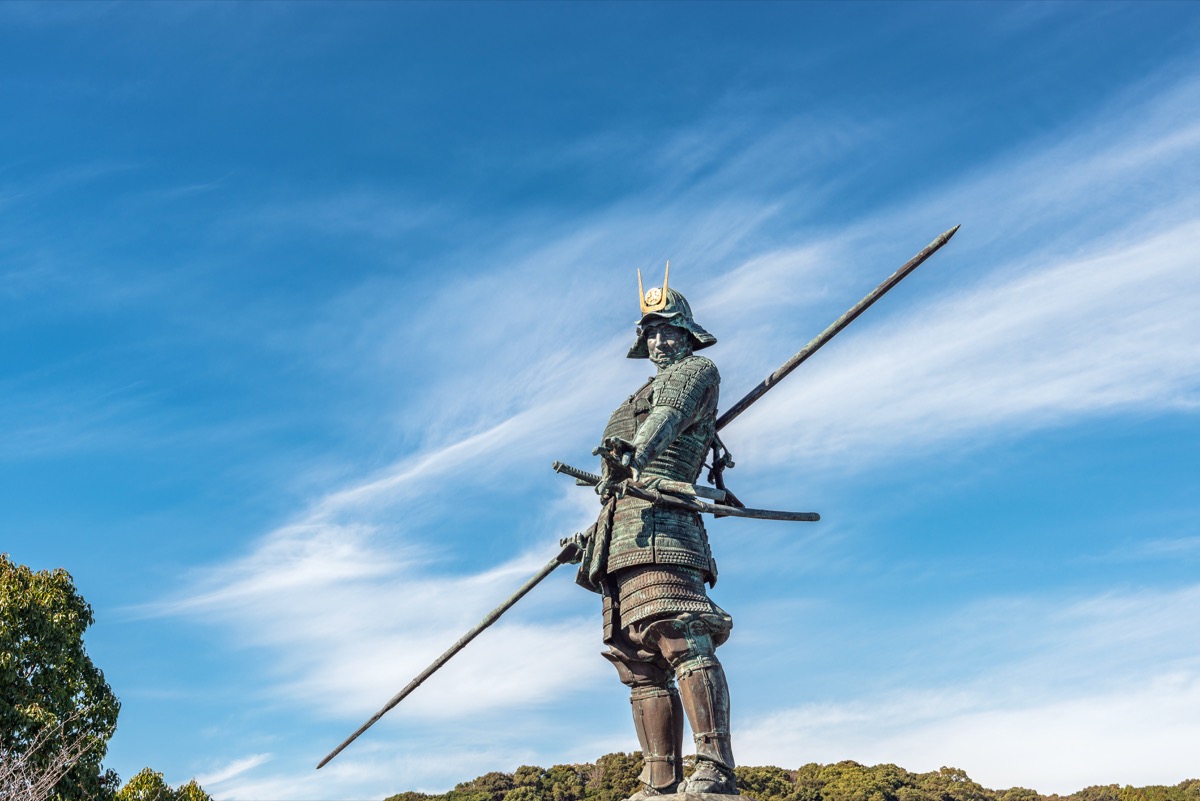
Samurai Survival
When Knowledge Becomes a Commodity
May 2, 2026
The professionals most exposed to AI disruption are not, as it turns out, the least skilled. They are among the most credentialed.
Securities analysts. Corporate lawyers. Management consultants. Strategy professionals of every kind. These are people who spent years — often a decade or more — building expertise in a specific form of intellectual labor: gathering large volumes of complex text, extracting what matters, and presenting it in a form that helps someone make a decision.
That work, it turns out, is exactly what large language models are designed to do.
The disruption is not hypothetical. It is structural. The underlying task — reading, synthesizing, translating complexity into usable insight — is precisely what these systems are optimized for. A professional who built their entire career on being a skilled intermediary between raw information and human decision-makers now finds that the intermediary function itself is being automated.
The identity question underneath the economic one
What makes this particular disruption different from previous rounds of automation is where it hits. Earlier waves displaced physical labor, then routine cognitive work. This wave is reaching into the domains that professionals used to consider safe: the work that required real intelligence, real education, real years of practice.
The anxiety this produces is not primarily about income, though that is real. It is about identity. When your professional self-concept was built around being someone who could do this rare, difficult thing — and that thing is suddenly abundant — the question that surfaces is not simply what do I do next?
It is: who am I?
That is a harder question. It does not have a skills-training answer.
A problem that has been solved before
In the early 17th century, the Sengoku period — over a century of near-continuous warfare across Japan — came to an end. The Tokugawa shogunate imposed peace. And the class of professional warriors who had built their entire identity and livelihood around military skill found themselves in a situation with a familiar shape.
Their core competency had just been made structurally irrelevant.
Not through failure. Not through lack of effort. Through a change in the environment so fundamental that the skill itself, however refined, no longer had a market. The samurai who doubled down — who perfected swordsmanship in a world where swords weren’t needed — fared poorly. Their expertise became, as one scholar put it, “increasingly ceremonial.”
The ones who navigated the transition were those who had something underneath their skill. They had maintained contemplative practices — Zen, calligraphy, the tea ceremony, poetry — not as hobbies but as a parallel form of training: in composed observation, clear seeing, action from stillness rather than reaction. These practices had been developed in Kyoto’s temples over centuries, and they offered something that no change in external circumstance could remove.
The question they had learned to sit with was not what should I do? but who am I, independent of what I do?
What the tradition offers that retraining cannot
There is no shortage of advice about how to “future-proof” yourself against AI disruption. Learn to prompt. Develop strategic thinking. Build relationships. Cultivate creativity.
This advice is not wrong. But it addresses the wrong level of the problem.
The professionals who will navigate this transition best are not those who successfully identify the next rare skill before AI catches up to it. They are those who have developed a relationship with their own minds that does not depend on their professional function remaining stable.
The Japanese term relevant here is kanshō (鑑照): clear observation, the capacity to see a situation — including one’s own reactions to it — without distortion from fear or attachment. It is the faculty that makes composed judgment possible when circumstances are unstable.
This is not a personality trait. It is trained. It has been trained, in Kyoto’s contemplative tradition, for over 1,200 years.
The question worth sitting with
The Sengoku warlords who built this capacity did not know they would need it when the wars ended. They built it because the conditions they operated in — extreme stakes, irreversible decisions, ambient uncertainty — demanded a quality of inner stability that no external preparation could substitute for.
The conditions today’s knowledge workers face are structurally similar. Not in scale, but in kind.
The question worth sitting with is not: which of my skills will AI not take?
It is: what is underneath my skills — and is it stable enough to carry me through a change I cannot fully predict?
That is a question Kyoto has been helping people answer for a very long time.