Leadership
The Oldest Evidence Base
May 2, 2026
There is a specific type of executive who will not, under any circumstances, attend a workshop described as spiritual, mindful, or wellness-oriented.
These are, typically, some of the most analytically rigorous people in any room. They have spent their careers in environments where claims require evidence, methodologies are scrutinized, and results are what matter. They are right to be skeptical of vague assertions about “inner peace.”
They are also, frequently, the ones who quietly recognize that something in the quality of their judgment or composure is the actual limiting factor — and that their usual tools don’t reach it.
When KMC co-founder Daisetz Sasaki describes Buddhist meditation to this kind of audience, he uses a specific framing: “What we’re offering is a database with 2,500 years of clinical accumulation.”
The response, particularly from academics and researchers, is consistently strong.
What the framing gets right
The history of Buddhist contemplative practice is, among other things, a systematic record of human experimentation on the mind. For 2,500 years, practitioners have been conducting structured observations: what states of mind can be deliberately cultivated? What practices reliably produce what outcomes? What conditions enable clear judgment, and what conditions undermine it?
This is not theology. It is empiricism operating at a timescale no modern research program can match.
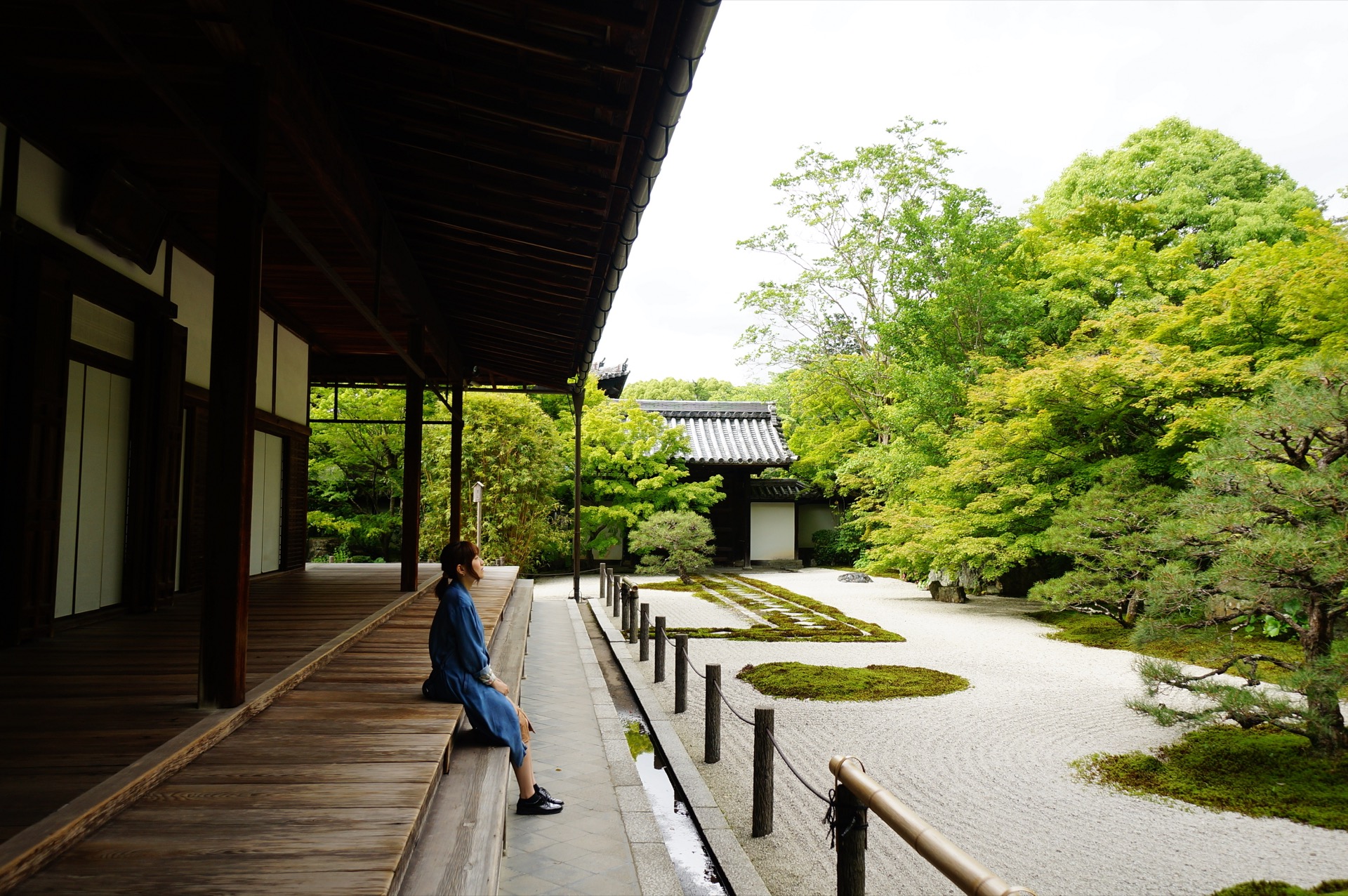
The results are not stored in a conventional database. They are stored in practices, in teacher-to-student transmission, and in the cultural expressions — architecture, gardens, ritual — that accumulated in places like Kyoto over more than a millennium.
What distinguishes this body of knowledge from modern mindfulness research is not depth of conviction — it is depth of observation. The studies supporting mindfulness applications are, at best, a few decades old and a few hundred subjects in size. The observational record underlying Zen practice spans thousands of practitioners across dozens of generations, with consistent findings refined through systematic disagreement and transmission.
Why analytical people are often the most ready
There is a common assumption that scientifically minded people are resistant to contemplative practice. The opposite tends to be true.
What skeptics resist is not evidence — they resist claims that bypass evidence. Framing Buddhist practice as “ancient wisdom” or “spiritual tradition” does precisely that: it asks the listener to accept something on the basis of authority or faith rather than verifiable results.
The reframe is simple. Buddhist practice is the longest-running systematic investigation into the workings of the human mind that has ever been conducted. Its methods are documented. Its results are consistent enough that modern neuroscience has spent the last three decades catching up to findings that Kyoto’s practitioners already held.
You don’t have to believe anything. You need only be willing to try the protocol.
The question worth asking
For executives who have optimized everything external — strategy, organization, process, incentives — and still find that something in the quality of their judgment or presence is the constraint, this framing offers a precise reorientation.
Not: should I be open to meditation? But: why would I not want access to 2,500 years of systematically accumulated insight into exactly the problem I’m working on?
The evidence exists. It has existed for a very long time. What has changed is whether the translation into language that evidence-minded people recognize has been done well enough to make it accessible.
That translation is what KMC is here to do.